Surgical Treatment
Daechan Hospital's Pediatric Deformity & Short Stature Clinic walks with patients.
Surgical Treatment
Q. What is the Ilizarov procedure?
A. The Ilizarov apparatus is an external fixation device in which thin wires or pins are inserted into the bone and connected to rings. The rings are connected to each other by metal rods, with adjustment nuts in the middle of the rods to control their length. By using these nuts to increase the distance between rings by 1 mm per day, the bone, skin, nerves, and muscles also generate new tissue and elongate together. The Ilizarov procedure uses this apparatus to create new bone in cases where bone has been significantly lost or shortened due to traffic accidents or congenital deformities. A patient from Jeju Island who developed osteomyelitis after a fracture and experienced non-union also underwent the Ilizarov procedure to achieve bone union, and femoral lengthening was performed to extend the bone by approximately 7 cm, achieving excellent treatment results.
In children whose growth has not yet ended, if the growth plate is damaged in an accident, the cartilage cells of the growth plate are destroyed, preventing bone growth and causing a discrepancy between the two limbs. When the leg length difference exceeds 2 cm, limping occurs during walking and the spine curves, leading to scoliosis. Without early surgery, the scoliosis becomes fixed, eventually requiring additional spinal correction surgery.
When lengthening bone, the treatment period is approximately one month per centimeter. For example, to lengthen bone by 1 cm at a rate of 1 mm per day, it takes 10 days to achieve the 1 cm lengthening, but an additional 20 days are needed for the lengthened bone to fully consolidate like normal bone. Therefore, lengthening 5 cm of bone requires approximately 5 months.
In younger patients, the bone consolidation period is shorter, while in older patients or those with osteoporosis, the period is significantly longer. Smoking during the treatment period is particularly dangerous, as it constricts blood vessels supplying the new bone, causing the treatment period to be 4-5 times longer than for non-smokers. This also applies to fracture healing without bone lengthening. Additionally, taking anti-inflammatory analgesics affects the substances that produce new bone, prolonging the treatment period, so patients should try to avoid or minimize the use of anti-inflammatory analgesics during treatment.
Recently, to shorten the period for lengthened bone to become normal bone, portable ultrasound devices are widely used, applied to the skin over the lengthened bone or fracture site for 20 minutes daily. In cases of osteoporosis, growth hormone injections or calcium and phosphorus injections are also used to shorten the treatment period for lengthened bone. While calcium and phosphorus tablets are available, they require standing for 30 minutes after taking them for proper gastrointestinal absorption, which can be inconvenient.
Recently, the Ilizarov procedure has been widely performed on patients with familial short stature or dwarfism caused by congenital conditions. However, in otherwise normal individuals who are slightly shorter due to familial factors, lengthening beyond 20% of the original bone length causes significant muscle tension, increasing joint pressure and potentially leading to arthritis several years after surgery. Another common complication is fracture of the lengthened bone after removal of the Ilizarov external fixator. This is a very serious complication requiring repeat surgery. Recently, to prevent this complication, a method of lengthening bone with an intramedullary nail inserted inside the bone has been used. The advantage is that the bone does not fracture, but the disadvantage is that a second surgery is required to remove the intramedullary nail.
Achondroplasia, the most common congenital cause of dwarfism, allows lengthening beyond 20% because the muscles and skin tissues stretch more easily compared to those of unaffected individuals. The Department of Orthopedic Surgery at Gyeongsang National University Hospital pioneered the Korea Short Stature Association (www.lpk.co.kr) and has treated many patients with dwarfism. Over 12 years, the department has performed approximately 2,000 or more surgeries using the Ilizarov technique, not only in the Gyeongnam region but nationwide, for extremely difficult-to-treat fractures, osteomyelitis, and limb deformity corrections. A website dedicated to the Ilizarov procedure has also been established to provide consultation and answer surgery-related questions for patients (http://nongae.gsnu.ac.kr/~os/height).
The cost of Ilizarov surgery ranges from 2 million to 10 million KRW for cases covered by health insurance such as poliomyelitis or traffic accidents, and 15 million to 20 million KRW for cases not covered by insurance such as short stature. The hospital stay is typically about 2 weeks, and after discharge, patients visit the outpatient clinic every 1 to 2 weeks for X-ray follow-up. If both lower limbs are operated on, the hospital stay may be extended by approximately one month.
Achondroplasia: Bow Leg Correction and Bone Lengthening 10 cm
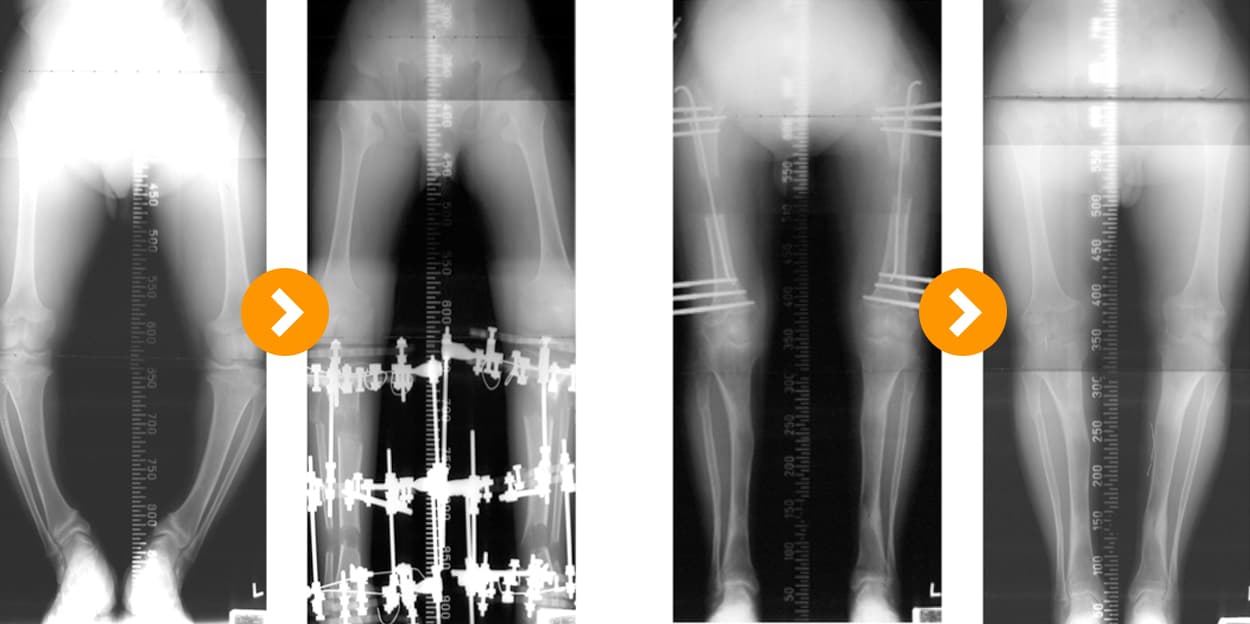
Achondroplasia: Tibial Lengthening (8 cm) and Femoral Lengthening (8 cm)
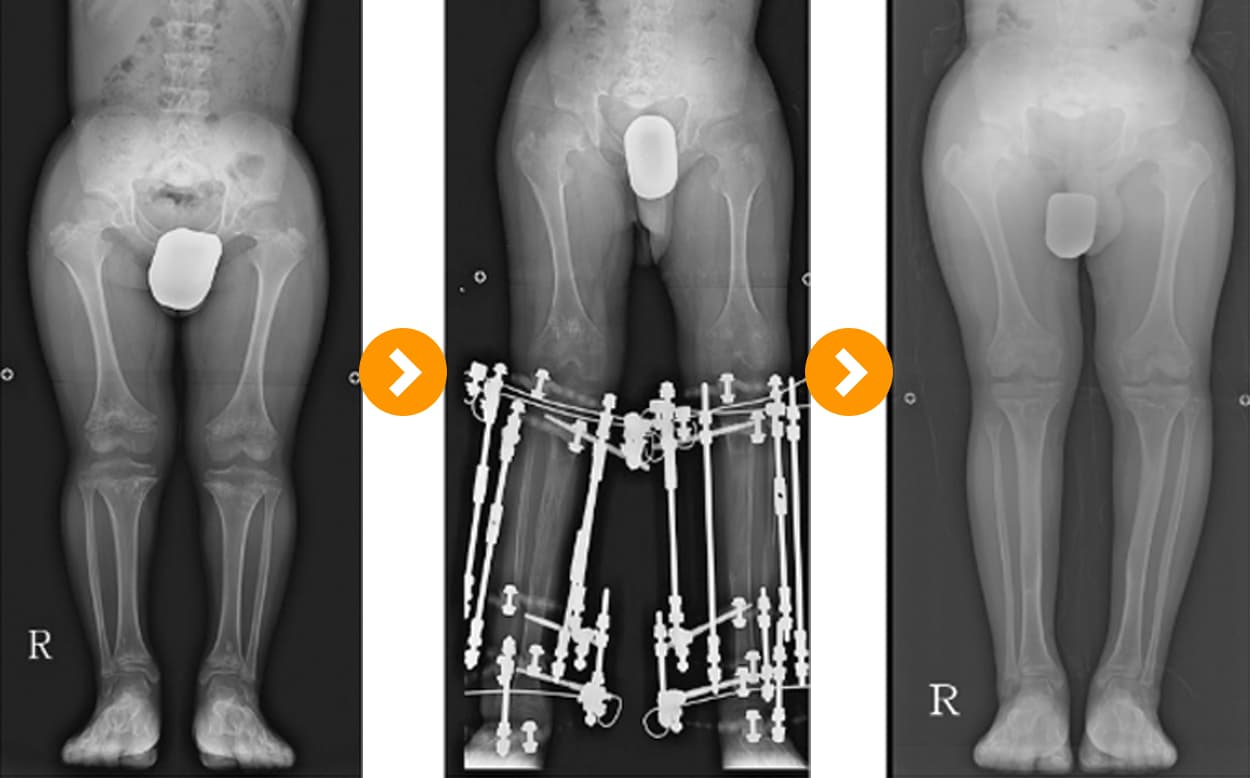
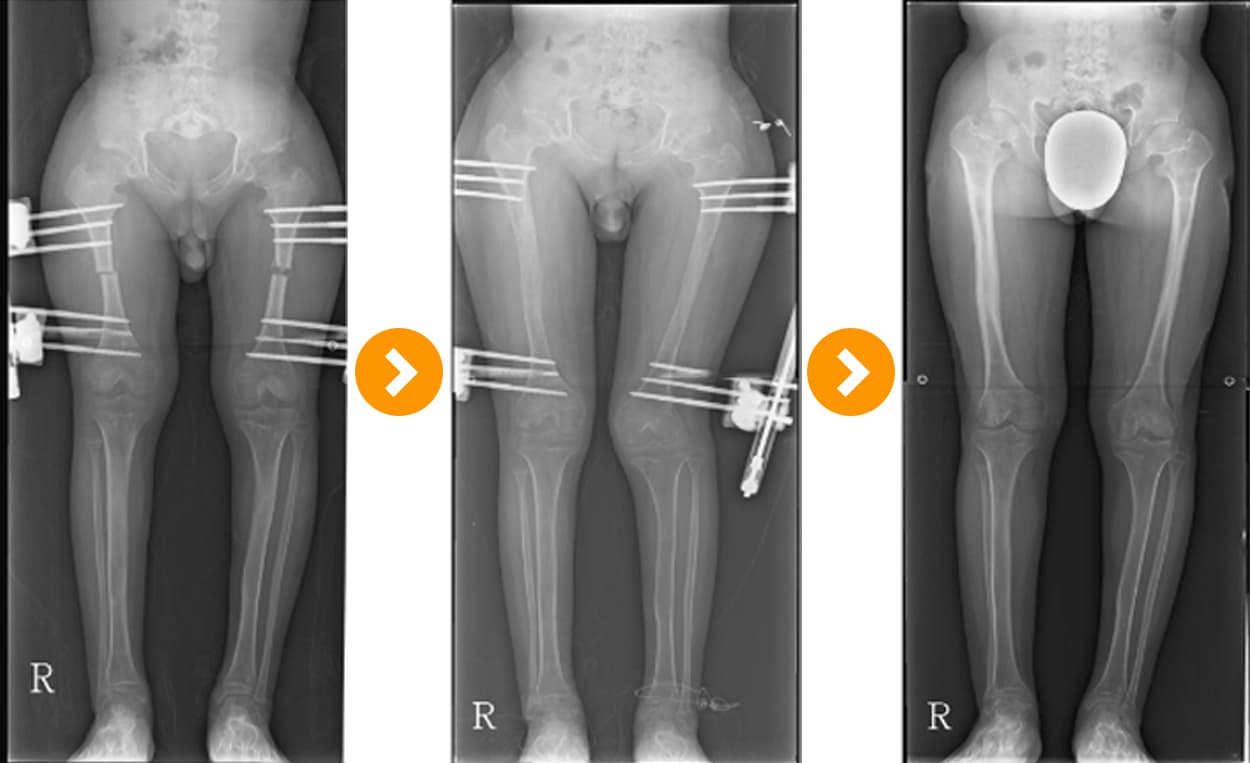
Achondroplasia: Upper Limb Lengthening 10 cm
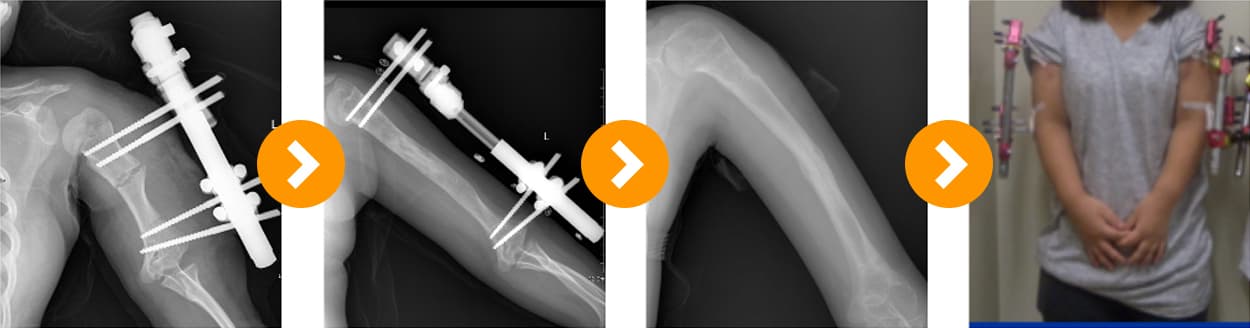
Achondroplasia: Upper Limb Lengthening 10 cm
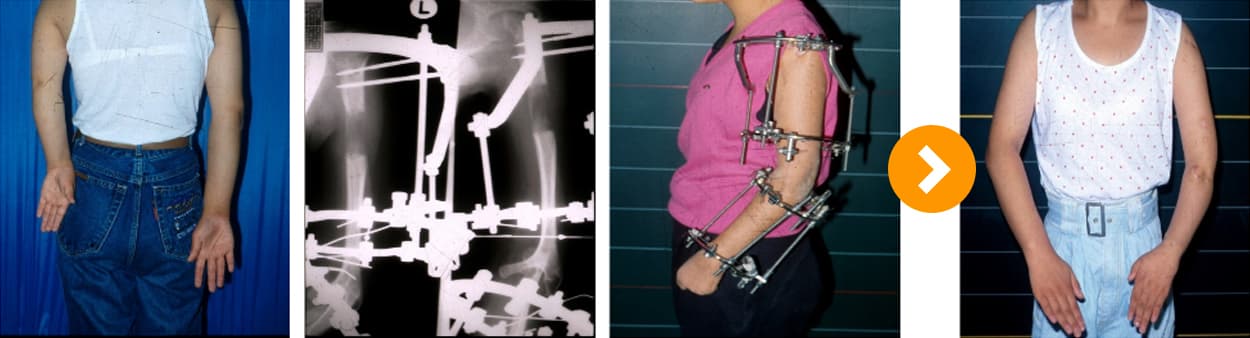
Foot Deformity: Ilizarov Correction
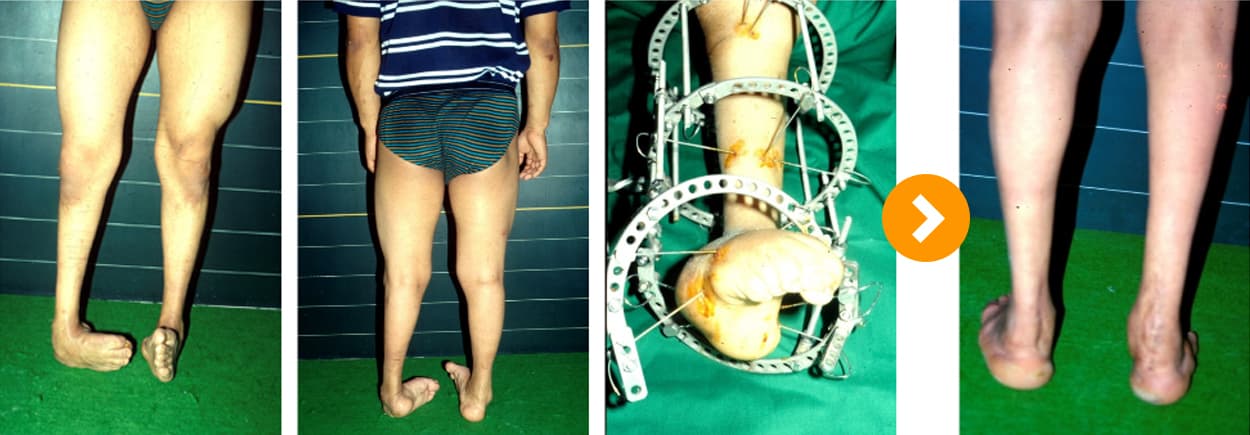
Tibial Osteomyelitis: Deformity Correction and Bone Lengthening
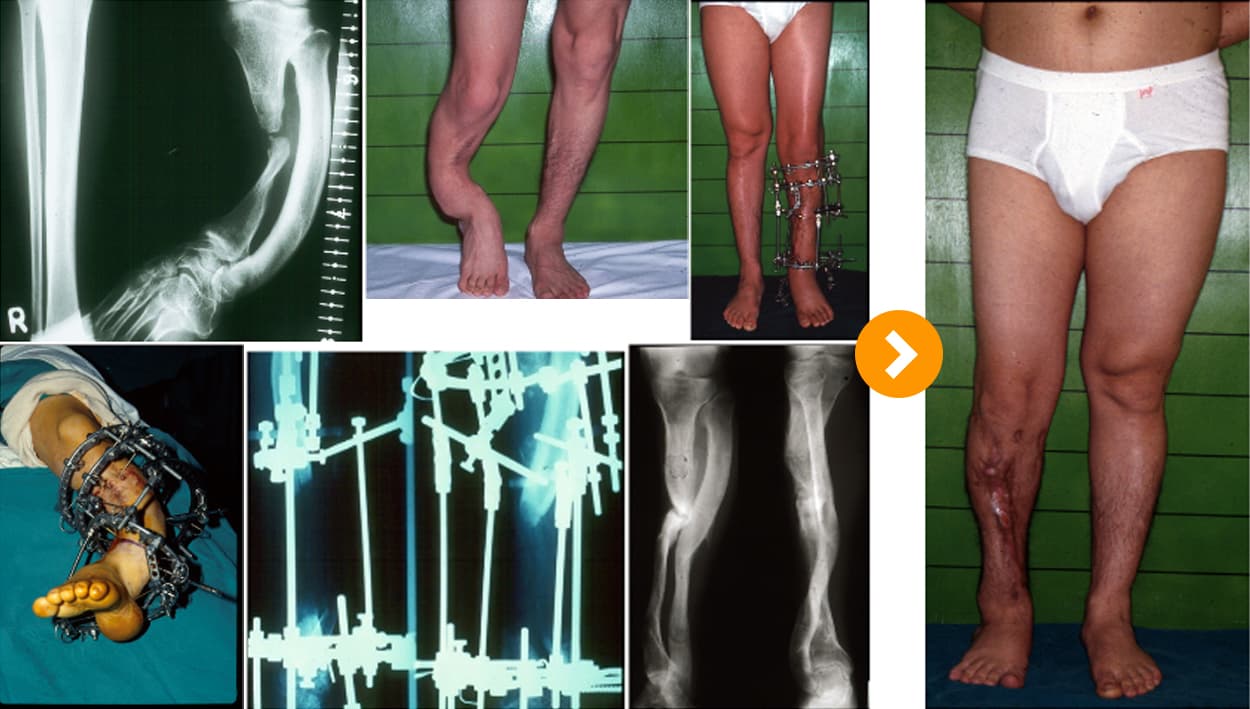
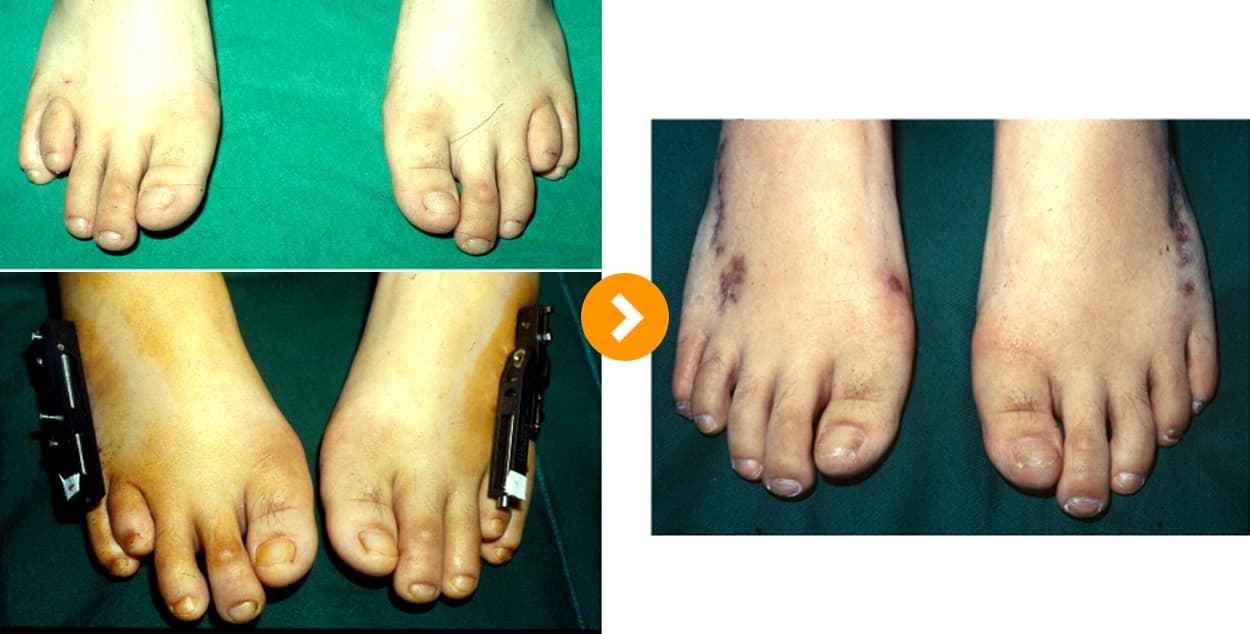
Brachydactyly Lengthening