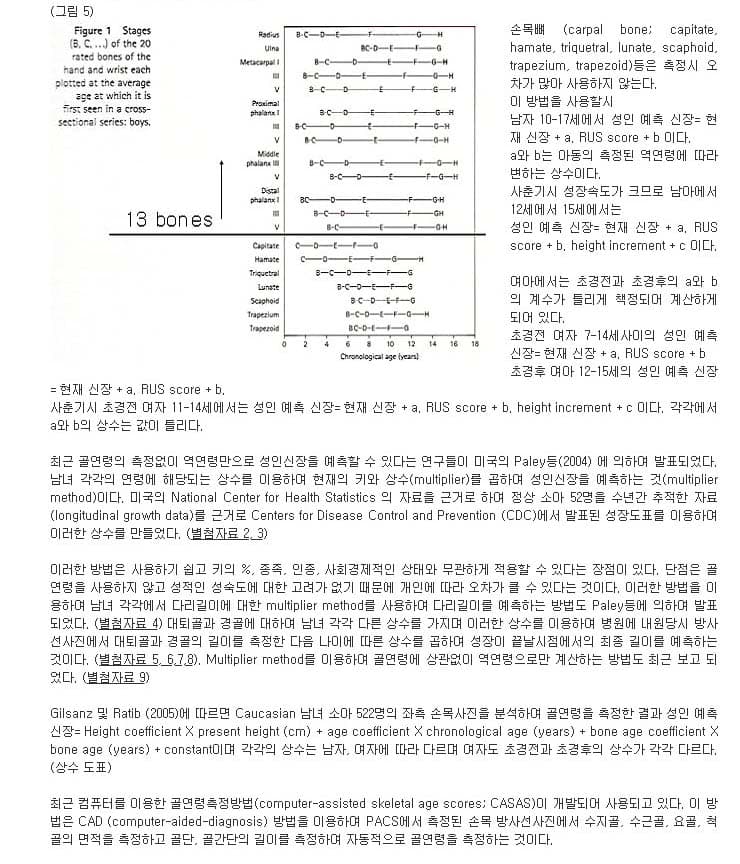
Height Tips
There is no gene for growing tall! What's the solution?
There is no gene for growing taller! What is the solution?
Height is 80% determined by genetics and 20% by environmental factors. Among all human physical traits, height is most strongly influenced by genetics, but there is no single gene that can be pinpointed as the one determining height.
A research team led by Professor Kim Hee-bal at Seoul National University's Department of Agricultural Biotechnology conducted the first large-scale study on Asians to identify height-related genes by comparing 300,000 single nucleotide polymorphisms (SNPs) from the DNA of approximately 8,000 Koreans.
According to the findings, individual physical characteristics are not determined by just one or two genes, and the entire genome must be analyzed for prediction. The study was able to explain 32% of genetic influence, and the team is currently researching where the remaining 70% of influence originates.

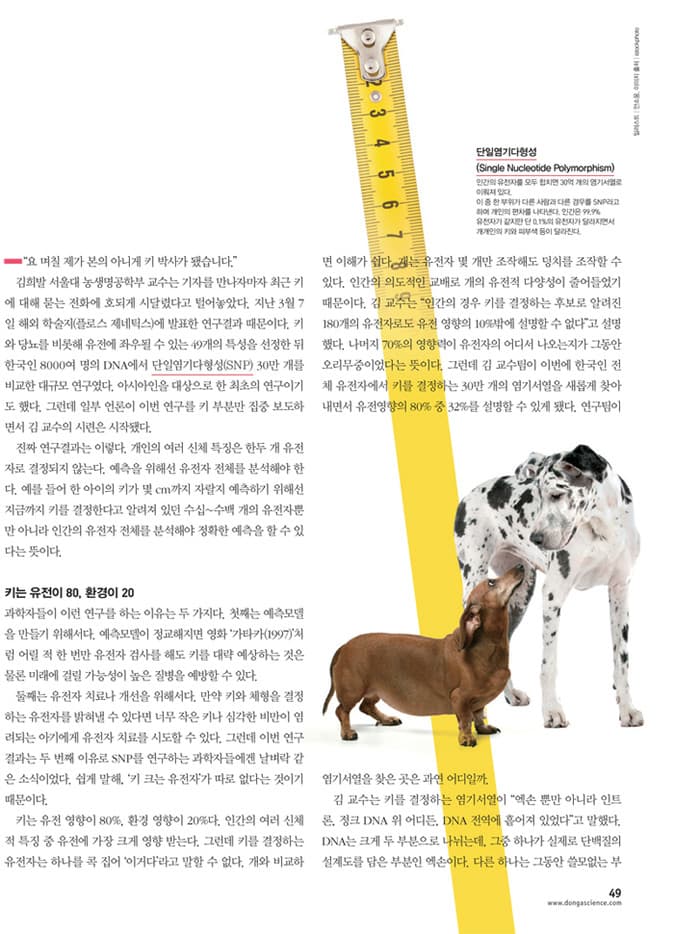
With environmental control alone, you can grow up to 15cm taller
Height is determined by 80% genetic factors and 20% environmental factors. Assuming an expected height of 165cm, the 20% environmental factor means you could potentially grow up to 15cm taller or shorter.
To maximize environmental factors, we first need to look at the growth plates. Growth plates are the cartilage located at the ends of long bones directly connected to joints such as the arms, legs, fingers, and toes — they are where bones grow.
The principle of height growth is that as growth plates grow and expand, the cartilage transforms into hard bone, ultimately making the bones longer. Growth plates grow actively during the growth period, then gradually begin to harden when puberty starts and testosterone (in males) or estrogen (in females) begins to be secreted, fully solidifying about 2 years later.
This is why exercise is strongly recommended for growth. The physical stimulation generated during exercise stimulates the receptors in the growth plates, triggering cellular responses.
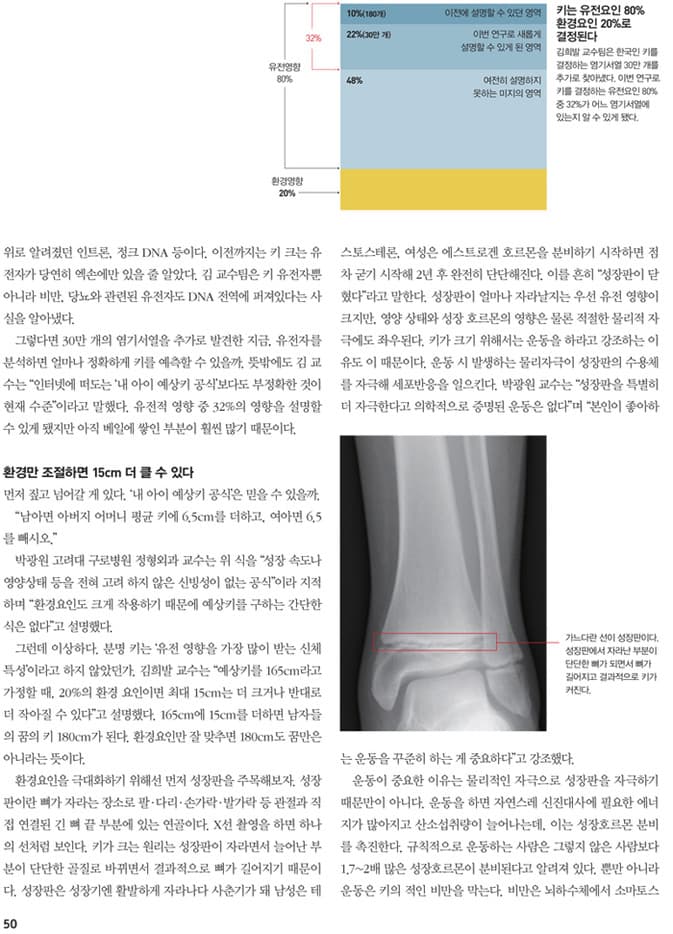

If you want to grow taller, cut down on late-night snacks!
Growth hormone plays a crucial role in promoting growth only when the growth plates are still open. Growth hormone injections are treatments used for conditions such as growth hormone deficiency, Turner syndrome, and Prader-Willi syndrome.
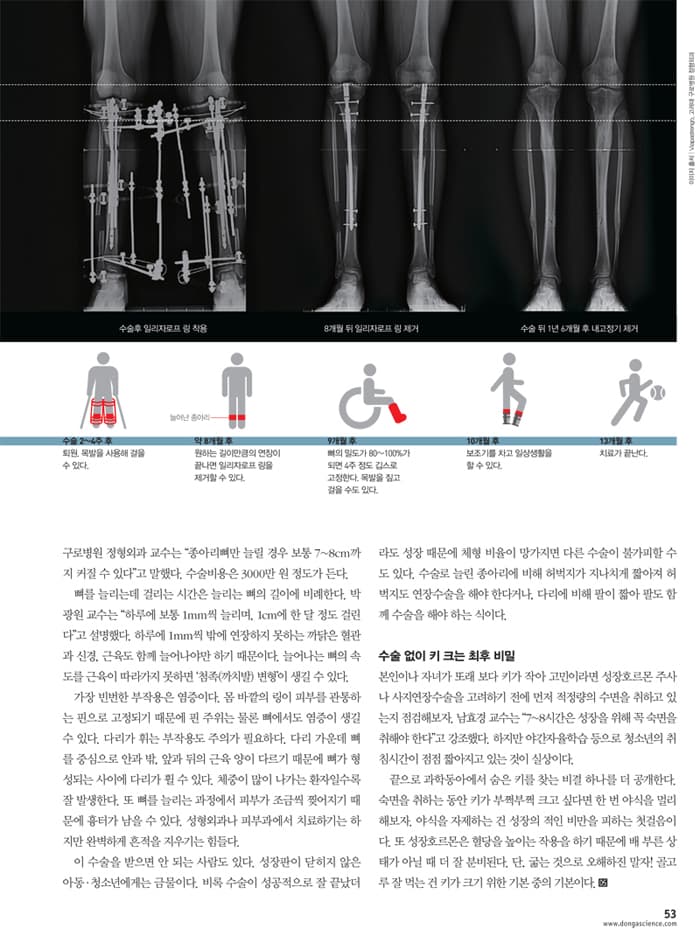
Limb lengthening surgery is the most dramatic method for increasing height in a short period. A special cylindrical device called the Ilizarov ring is implanted to support the legs while the bones are being lengthened.
The ultimate secret to growing taller without surgery is a balanced diet, sufficient sleep, and regular exercise. Since growth hormone is most actively secreted during sleep, it is important to develop a habit of going to bed early and waking up early.
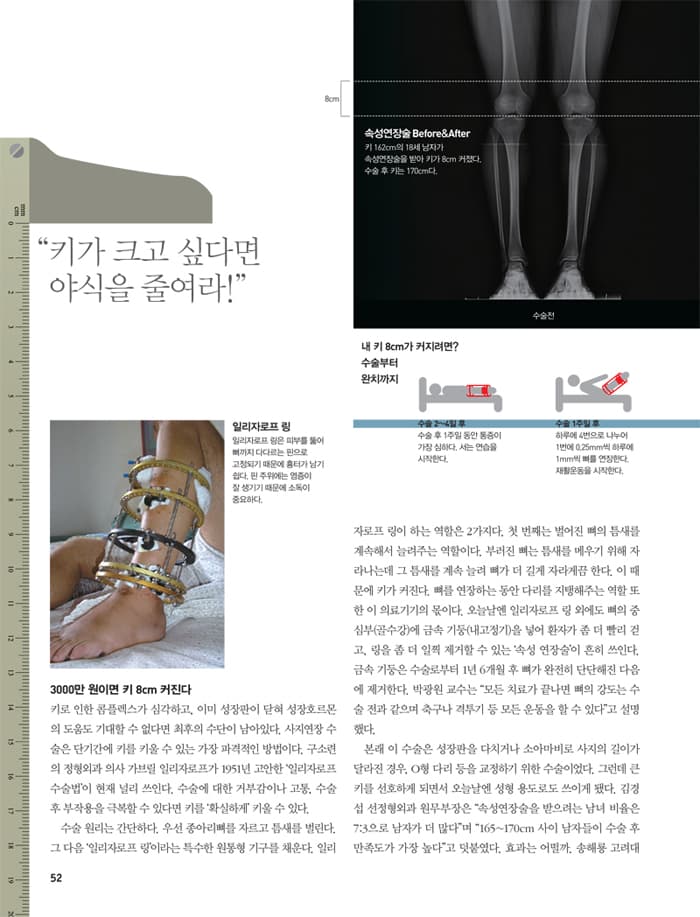
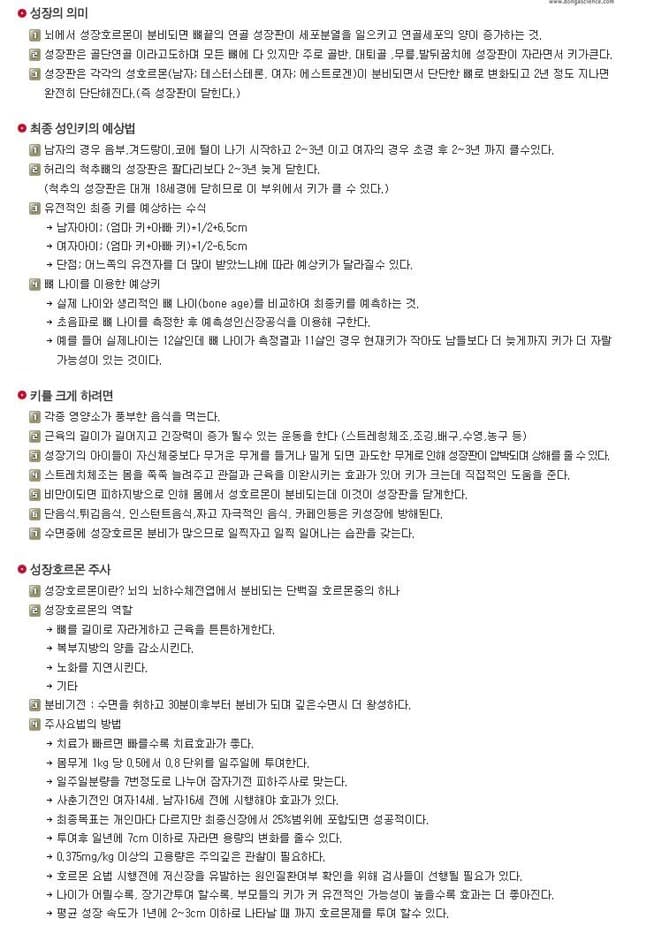
The meaning of growth and growth hormones
Growth occurs when growth hormone is secreted from the brain, triggering cell division in the cartilage growth plates at the ends of bones, increasing the amount of cartilage cells. The growth plates harden into solid bone as sex hormones (testosterone in males, estrogen in females) are secreted, fully solidifying after about 2 years.
Formula for predicting the genetically determined final height: Boys = (Mother's height + Father's height) / 2 + 6.5cm, Girls = (Mother's height + Father's height) / 2 - 6.5cm. Predicted height using bone age compares the actual age with the physiological bone age to predict the final height.
Growth hormone is a protein hormone secreted by the anterior pituitary gland of the brain. It promotes longitudinal bone growth, strengthens muscles, and reduces abdominal fat. Since growth hormone is most actively secreted during sleep, it is important to develop a habit of going to bed early and waking up early.
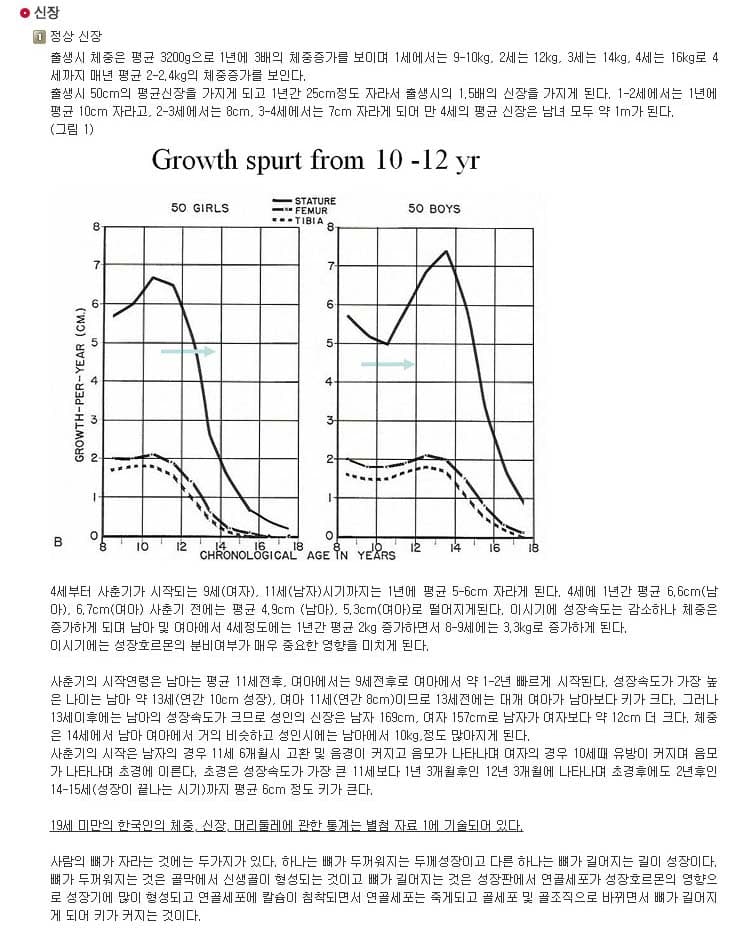
Growth plates and adult height prediction
Growth plates are located in all 320 bones of the body. The most rapidly growing area of the body is the knee — the distal growth plate of the femur grows about 1cm per year, and the proximal growth plate of the tibia grows about 0.7mm per year.
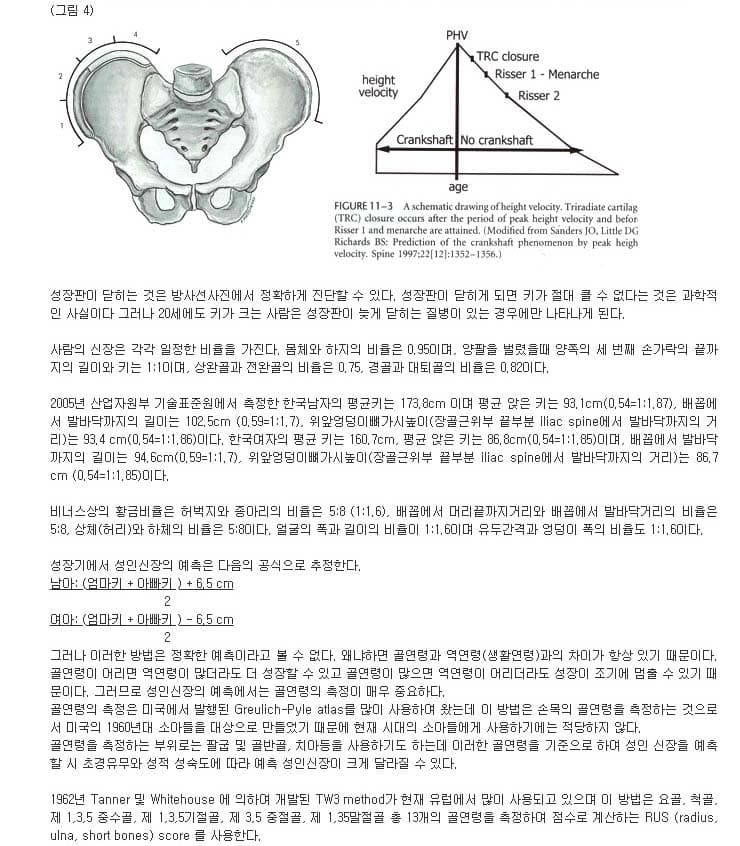
The closure of growth plates can be accurately diagnosed through radiographic images. While the age at which the growth plates of the upper and lower extremities close varies from person to person, females typically experience closure between ages 13-15, and males between 15-17, after which growth ceases.
Predicting adult height during the growth period involves multiplying the current height by a constant (multiplier method). The Greulich-Pyle atlas is widely used for measuring bone age, and recently, computer-assisted skeletal age scoring systems (CASAS) have been developed and are in use.
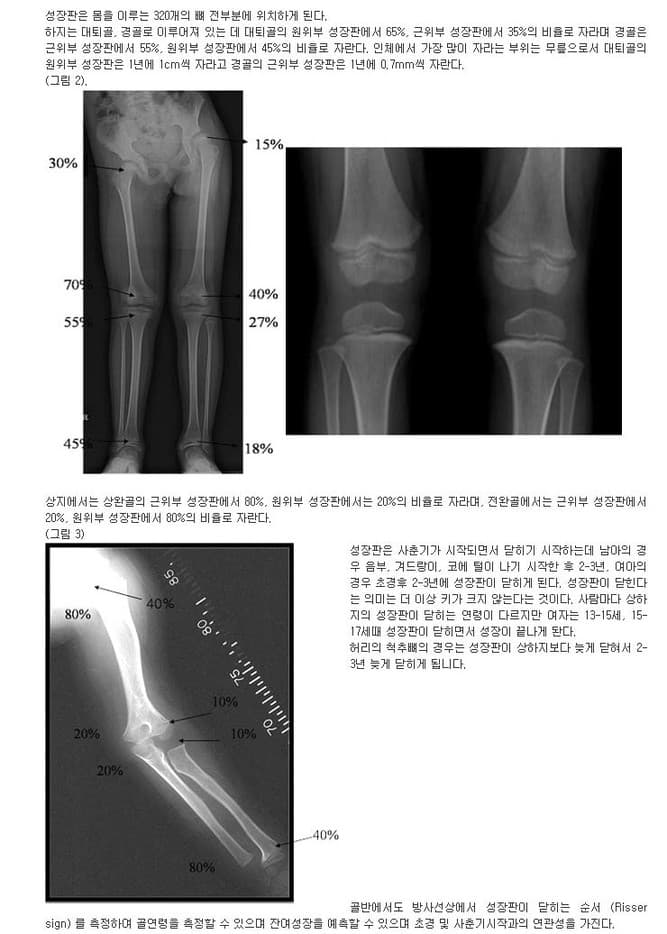
Bone age measurement and growth prediction
Areas used for measuring bone age include the elbow, pelvis, and teeth. When predicting adult height based on bone age, the predicted adult height can vary significantly depending on the onset of menarche and the level of sexual maturity.