Bone Defect/Disease Fusion Therapy Center, National Hospital Specialization Research Center
Korea University Guro Hospital Bone Defect/Disease Fusion Treatment Center, Designated as Hospital Specialization Research Center by the Ministry of Health and Welfare
Spurring the Development of Patient-Customized Artificial Bones More Realistic than Actual Ones. 7 billion KRW invested for the next 5 years, focusing on conquering the global market through the development and commercialization of medical devices
The Bone Defect and Disease Fusion Treatment Center (Director Song Hae-ryong) of Korea University Guro Hospital has been designated as a Hospital Specialization Research Center by the Ministry of Health and Welfare.
The Bone Defect and Disease Fusion Treatment Center announced that it will begin full-scale research activities to treat the four major orthopedic diseases: limb and spine fractures, osteomyelitis, artificial joints, and bone tumors.
By 2015, it plans to develop and commercialize patient-customized artificial scaffolds that promote bone formation and functional cell fusion, such as growth factor-coated implants, artificial supports for osteomyelitis treatment with antibiotics, artificial supports for bone regeneration with growth factors, and artificial supports for bone regeneration with antibiotics and growth factors.
To this end, the center will invest a total of 7 billion KRW, including 5 billion KRW in government subsidies, 1 billion KRW from CowellMedi, and 1 billion KRW from Samjin Pharmaceutical, over the next five years.
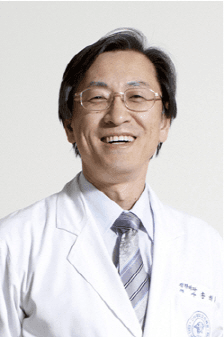
Professor Song Hae-ryong (Orthopedic Surgery), Director of the Bone Defect and Disease Fusion Treatment Center at Korea University Guro Hospital, pointed out, "As the world enters an era of hyper-aging, the global medical industry market for bone defects and diseases will reach 52 trillion KRW in 2015," and said, "As the market has great growth potential, it will become a blue ocean that contributes to the future development of the national medical industry."
He continued, "Our greatest strength is that we have world-class clinical and research capabilities, the largest clinical database for refractory bone diseases, and the ability to rapidly develop and commercialize products in conjunction with the medical device clinical trial center." He also emphasized, "We will develop international competitiveness to reduce our reliance on foreign medical devices and boldly challenge the global market."
Meanwhile, the Hospital Specialization Research Center is a large-scale national support research project implemented by the Ministry of Health and Welfare to focus on fostering the most competitive specialized fields of each hospital and recreate the brand value of the hospital.
The Fusion Treatment Center for Bone Defect/Disease of Korea University Guro Hospital was designated as the National Hospital Specialization Research Center by the Ministry of Health and Welfare.
The Bone Defect/Disease Fusion Treatment Center will start research activities in order to develop new fusion methods for the four major OS issues: limb and spine fractures, osteomyelitis, artificial joints, and bone tumors.
It is planned to develop and commercialize custom-made artificial scaffold (bone substitute) to encourage bone formation capability and functional cell fusion such as an implant coated with growth factors, an artificial scaffold for the treatment of osteomyelitis with mounted antibiotics, an artificial scaffold for osteogenesis with mounted growth factors, an artificial scaffold for osteogenesis with mounted antibiotics and growth factors, etc. in steps until 2015.
Professor Hae-Ryong Song, the Director of the Bone Defect/Disease Fusion Treatment Center of Korea University Guro Hospital, indicated, “As the world enters into a time with a large number of elderly, the size of the foreign medical industry market for bone defect/disease will reach 52 trillion KRW in 2015,” and said, “As the market growth potential is large, the market will be the blue ocean which can support the national medical industry development in the future.”
He said, “Our strongest point is that world-class clinical and research capabilities and the largest clinical database for inveterate bone diseases is provided and that prompt development and commercialization is possible in connection with the medical device clinical center,” and emphasized, “We will have international competitiveness in order to reduce the foreign dependence of domestic medical devices and challenge the world markets in an imposing manner.”