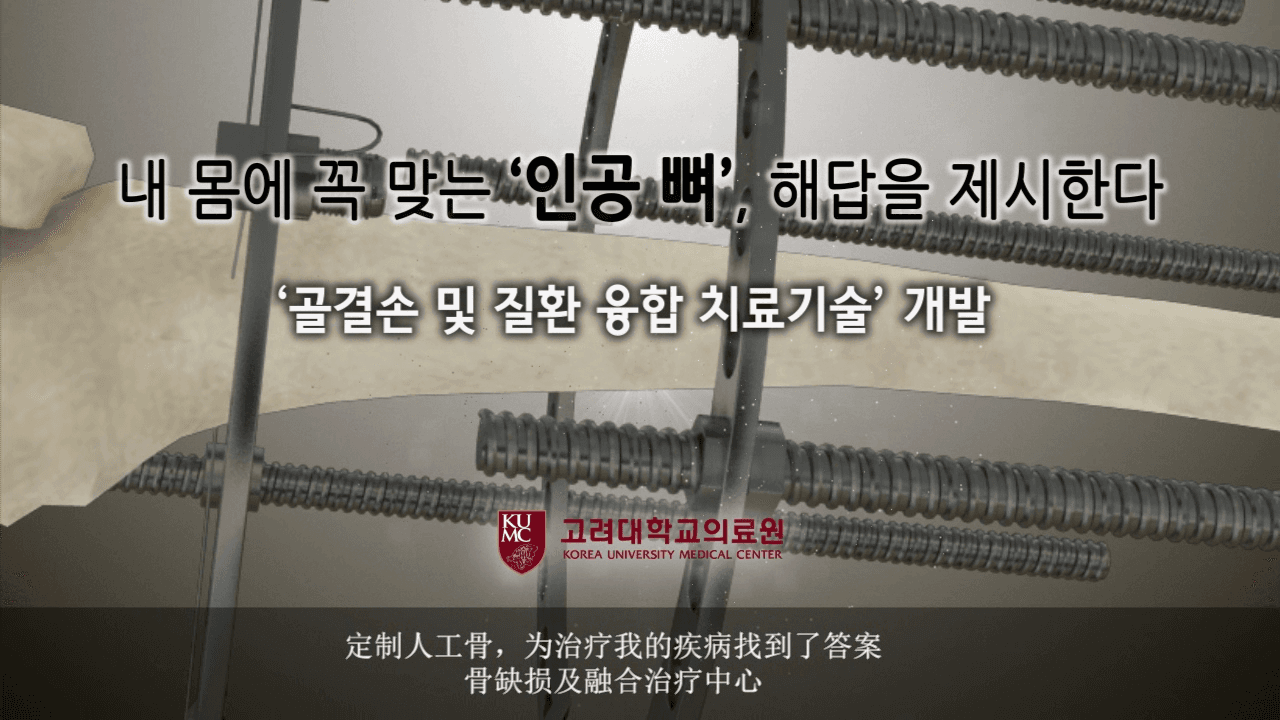
Notice: Customized Artificial Bone, Found the Answer to My Disease
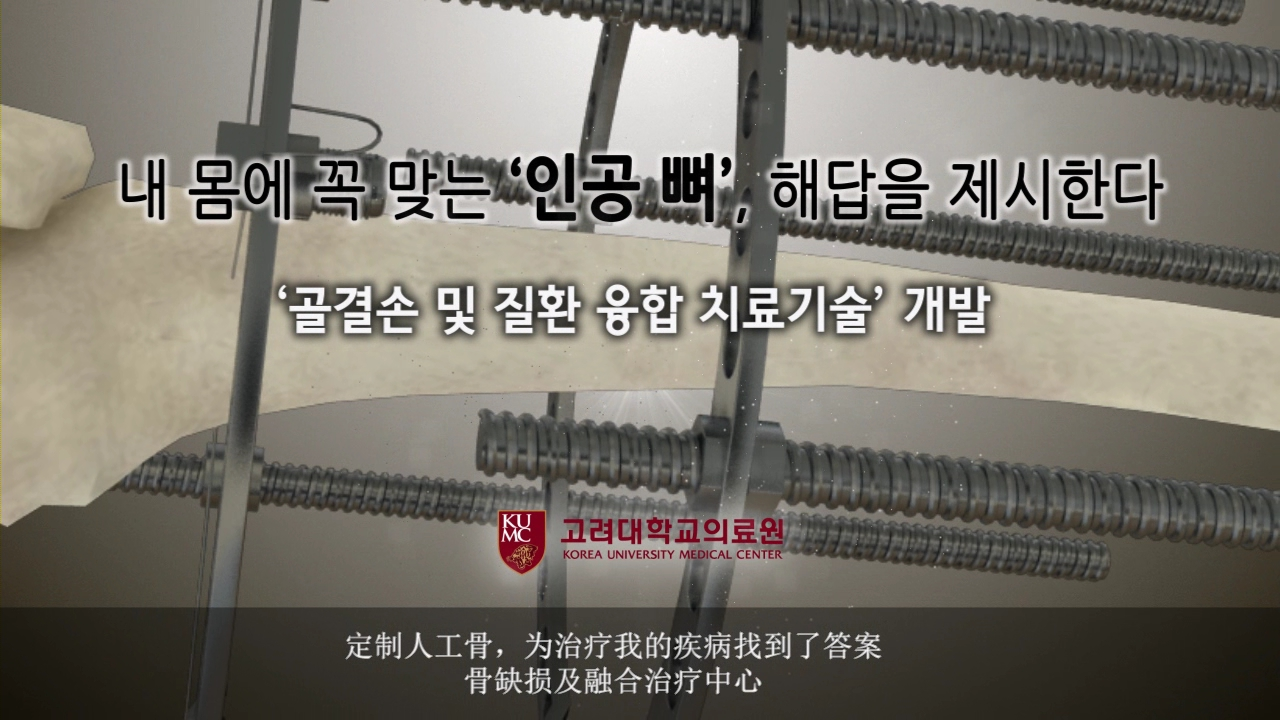
Custom-made artificial bone provides an answer to treating my disease
Bone Defect and Fusion Treatment Center
Mr. I am not a loser, although I have lived cautiously due to my short stature.
Mr. The accident happened again, causing a fracture due to an unexpected car accident.
Mr. I was ostracized because my deformed limbs caused me physical and mental pain.
Thanks to modern medicine's high technology, such as the Ilizarov technique, they can return to life with a smile.
The Ilizarov technique is widely used for bone defects and rare bone diseases caused by musculoskeletal problems. In principle, the normal bone is cut near the diseased bone and fixed firmly with an external fixator, allowing 1mm of new bone to form every day.
However, this requires patience, as it takes 30 days for 1cm to grow normally.
There are also complications, such as delayed or non-union requiring reoperation to implant artificial bone to promote osteogenesis, and pin site infections requiring antibiotics.
Currently, Korea University Medical Center is working hard to apply for the "fracture treatment package product" to clinical practice. This includes external fixation devices, products that promote bone formation and bone healing, as well as a series of products that promote complete recovery from fractures and bone defect diseases, such as anti-adhesion wound care and artificial bone.
Currently, the medical center is paying particular attention to accelerating the technological development and research of artificial bone manufacturing, as this is the core of treatment.
A technology for manufacturing artificial bone named by Korea University Medical Center: "Theory of manufacturing artificial bone with antibiotics and inducing bone formation with antibacterial activity."
Attempts to reduce implant failure rates caused by bacterial infections and promote bone formation to shorten treatment times.
Polymethylmethacrylate, bone cement (PMMA), has the disadvantage of being difficult to control for antibiotic release and requiring a second surgery for removal.
Allograft bone grafting obtained from corpses may require reoperation due to slower bone formation speed.
Autologous bone grafting has the risk of postoperative pain and infection complications because bone tissue is taken from another part of the patient's own normal body.
The artificial bone manufacturing technology of Korea University Medical Center provides the following advantages of artificial bone:
Injecting antibiotics and the bone formation-promoting growth factor BMP-2. Surface treatment is performed sequentially with dopamine and heparin.
Bacterial infection can be prevented during and after implantation due to the long-term sustained release of antibiotics, so the implant failure rate is significantly reduced.
At the same time, BMP-2, which promotes bone fusion and bone formation, is continuously released between the artificial bone and bone tissue, promoting the differentiation of osteoblasts and promoting bone formation. This shortens the treatment cycle to 10 days.
In addition, artificial bone can be customized for each patient, increasing the success rate of implantation, which reduces the financial burden of reoperation.
Currently, 3D bioprinting technology, stem cells, and artificial bone surface coating technology are being developed for mass production of artificial bone.
The BMP-2 (growth factor) market, led by the United States, has a huge economic value of 1 trillion KRW in the US market alone.
Due to the aging population and the increasing incidence of fractures and bone defect diseases, the artificial bone market will grow rapidly.
In the current situation, the "fracture treatment package product" promoted by the Korea University Medical Center Bone Disease and Bone Defect Fusion Treatment Center, with its excellent technology, will play a leading role in the Korean medical market.