Notice: (2) No More Rare Diseases?
[커버스토리] 더 이상 희귀질환은 없다? - (2)
[Cover Story] No More Rare Diseases? - (2)
정부, 현행 희귀질환 지원 대상자 확대 계획 없다 밝혀
Government states no plans to expand current support for rare disease patients
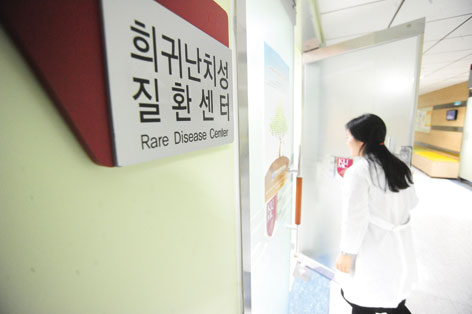
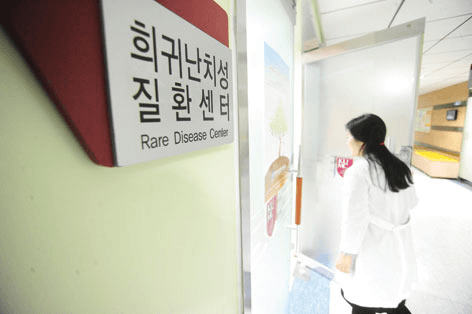
희귀질환자는 누구에게 어디로 가야 하나
Where should rare disease patients go, and who should they see?
희귀질환자들이 겪는 어려움은 비단 경제적 문제뿐만이 아니다. 우선 환자가 적다는 점은 정보가 적다는 의미, 관련 희귀질환 전문의가 있으면 다행이라고 여길 정도다. 그러다보니 진단을 받기까지 지난한 과정을 거치는 경우가 허다하다.
The difficulties experienced by rare disease patients are not only economic. First, the small number of patients means a lack of information, and it's considered fortunate if there is a specialist in the related rare disease. As a result, many patients go through a long process before being diagnosed.
실제로 지난 2009년 질병관리본부가 발표한 ‘건강보험공단자료 및 병원 의무기록 자료를 활용한 희귀질환 의료기관 이용현황 조사(책임연구자 경상대학교 예방의학교실 박기수 교수)’에서 희귀질환자들을 대상으로 진행한 설문조사 결과, 질환 증상을 느낀 시점과 확진 받은 시점은 평균 3개월 정도 걸리는 것으로 나타났다. 설문은 2009년 7월에서 9월까지 3개월간 희귀질환자 1,054명(성인환자, 보호자, 소아환자)을 대상으로 진행됐다(만성신부전 등 1, 2차 의료기관에서 진료가능한 질환은 제외). 또 전체 44.1%가 오진을 경험하고, 오진으로 평균 519만61만원을 지출한 것으로 조사됐다. 질환별 확진 의료기관과 현재 진료 받는 의료기관이 동일한 지 여부를 묻는 질문에는 56.5%만이 그렇다고 답해, 응답자 절반가량은 확진을 받고도 치료에 만족하지 못해 다른 의료기관으로 옮긴 것으로 나타났다. 희귀질환으로 일상생활에 대한 어려움은 ▲건강악화(41.2%) ▲경제적 어려움(25.5%) ▲미래에 대한 불안(12.5%) 등을 꼽았다.
In fact, according to a survey of rare disease patients in the 'Survey on the Use of Medical Institutions for Rare Diseases Using Data from the National Health Insurance Corporation and Hospital Medical Records (Researcher: Professor Park Ki-soo, Department of Preventive Medicine, Gyeongsang National University)' announced by the Korea Centers for Disease Control and Prevention in 2009, it took an average of about 3 months from the time they felt symptoms of the disease to the time they were diagnosed. The survey was conducted on 1,054 rare disease patients (adult patients, guardians, and pediatric patients) for 3 months from July to September 2009 (excluding diseases that can be treated at primary and secondary medical institutions such as chronic renal failure). In addition, 44.1% of the total experienced misdiagnosis, and it was found that an average of 5,190,061 won was spent on misdiagnosis. When asked whether the medical institution that made the diagnosis and the medical institution currently receiving treatment were the same, only 56.5% answered yes, indicating that about half of the respondents were not satisfied with the treatment even after being diagnosed and moved to another medical institution. Difficulties in daily life due to rare diseases included ▲deterioration of health (41.2%) ▲economic difficulties (25.5%) ▲anxiety about the future (12.5%).
조사 결과에서 보여지듯 희귀질환자들은 진단과 치료에 많은 어려움을 느끼고 있었다.
As the survey results show, rare disease patients were experiencing many difficulties in diagnosis and treatment.
이런 문제를 해결하기 위해 정부가 꺼낸 카드가 ‘희귀난치성질환 지역거점병원(이하 거점병원)’이다. 보건복지부는 지난 2006년부터 충남대병원, 인제대 부산백병원, 화순전남대병원, 등 세 곳을 거점병원으로 지정해 지원하고 있다.
The card the government pulled out to solve this problem is the 'Regional Base Hospital for Rare and Intractable Diseases (hereinafter referred to as base hospital)'. Since 2006, the Ministry of Health and Welfare has designated and supported three places as base hospitals: Chungnam National University Hospital, Inje University Busan Paik Hospital, and Hwasun Chonnam National University Hospital.
하지만 거점병원의 효율성에 대해서는 전문가들 사이에서 이견이 엇갈리고 있다.
However, experts disagree on the efficiency of base hospitals.
희귀질환자 의료기관 이용현황 연구를 진행한 박기수 교수는 “희귀난치성 질환은 정보가 부족하고, 진단이 어렵다. 이것이 오진이 많은 이유 같다”며 “거점병원에서 모든 질환을 커버할 수는 없다. 거점병원은 일부 질환에 특화돼 있기 때문이다. 지방에 거주하는 희귀질환자들의 이동의 어려움이나 진료시간 단축을 위한 목적과는 부합하지 않다”고 피력했다.
Professor Park Ki-soo, who conducted the research on the use of medical institutions by rare disease patients, said, “Rare and intractable diseases lack information and are difficult to diagnose. I think this is why there are so many misdiagnoses. Base hospitals cannot cover all diseases. This is because base hospitals are specialized in certain diseases. It does not meet the purpose of alleviating the difficulty of movement or shortening treatment time for rare disease patients living in rural areas.”
서울대병원 소아청소년과 김승기 교수도 “희귀질환자들은 수가 적은 만큼 자신과 같은 많은 환자들을 본 전문의를 찾는다. 하지만 거점병원에 꼭 필요한 전문의가 있지는 못한다. 지역 안배 차원으로 접근해서는 안된다는 말”이라며 “차라리 (특화된 전문센터에) 선택해서 집중 지원하는 것이 더 나은 방법일 수 있다”고 말했다.
Professor Kim Seung-ki, Department of Pediatrics, Seoul National University Hospital, said, “Because there are so few rare disease patients, they look for specialists who have seen many patients like them. However, base hospitals do not necessarily have the specialists they need. This means that you should not approach it as a regional allocation issue.” He also said, "It may be a better method to selectively provide intensive support to specialized professional centers."
반면 거점병원으로 지정돼 운영 중인 부산백병원 희귀질환전문센터 정우영 교수는 “특정질환을 전문적으로 치료할 수 있고, 지역적으로 확대시켜 나간다는 것은 의미가 있다”며 “희귀난치성질환 치료에 도움을 줄 수 있도록 지역 의사 교육에도 힘쓰고 있다”고 말했다.
On the other hand, Professor Jung Woo-young of the Rare Disease Center at Busan Paik Hospital, which is designated and operated as a base hospital, said, “It is meaningful to be able to treat specific diseases professionally and expand them regionally.” He also said, “We are also working hard to educate local doctors so that they can help treat rare and intractable diseases.”
부산백병원은 거점병원 지정 후 희귀질환자 수가 2008년 4,031명에서 2011년 5,349명으로 3년 사이 1,318명이 늘어났다. 외부 지원은 연간 정부 약 6,200만원 가량과 사회복지단체 2억원 정도가 전부다. 이 비용으로 희귀질환자들에 대한 진단 및 치료와 지역 내 의사 교육, 희귀질환아들을 위한 캠프 등을 진행하고 있다.
Since being designated as a base hospital, the number of rare disease patients at Busan Paik Hospital has increased by 1,318 in 3 years, from 4,031 in 2008 to 5,349 in 2011. External support is only about 62 million won from the government and about 200 million won from social welfare organizations annually. With this cost, they are conducting diagnosis and treatment for rare disease patients, education for doctors in the region, and camps for children with rare diseases.
기댈 수 있는 부분은 치료제 개발 뿐
The only thing to rely on is the development of treatments
희귀질환자들이 경제적 어려움 없이 치료를 잘 받을 수 있는 방법은 많지 않다. 특히 대부분 유전적 질환인 희귀질환은 수술적 방법 보다 치료제 개발에 기대를 거는 경우가 많다. 즉, 보다 싼 약을 제때에 공급받을 수 있어야 한다는 의미다. 반복되는 말이지만, 희귀질환자 소수를 위해 수십, 수백억 원을 투입해 신약을 개발하는 제약사는 많지 않다. 때문에 관련 전문가들은 이 부분도 정부가 나서서 해결해야 한다고 지적하고 있다.
There are not many ways for rare disease patients to receive treatment without economic hardship. In particular, rare diseases, most of which are genetic diseases, often rely on the development of treatments rather than surgical methods. In other words, it means that cheaper drugs must be supplied on time. It has been said repeatedly, but there are not many pharmaceutical companies that invest tens or hundreds of billions of won to develop new drugs for a small number of rare disease patients. Therefore, related experts point out that the government should step in to solve this problem.
고대 구로병원 희귀질환연구소 박광원 교수는 “(희귀질환) 치료에 있어 외국이나 한국이나 크게 차이는 없다. (사용 가능한) 약물과 정형학적인 부분도 마찬가지”라며 “여기에 치료제 사용 또한 환자의 경제적 여건을 감안하지 않을 수 없다는 점도 어려운 부분”이라고 말했다.
Professor Park Kwang-won of the Rare Disease Research Institute at Korea University Guro Hospital said, “There is no big difference between foreign countries and Korea in the treatment of (rare diseases). The same goes for (available) drugs and orthopedic aspects.” He also said, “It is also difficult to use treatments without considering the patient’s economic situation.”
김승기 교수도 “희귀질환은 자본주의사회에서 대우받기 어려운 질환이다. 드문만큼 제약사에서 크게 관심을 갖지 않는다. 그러다보니 가격은 비싸고, 그나마도 수입약이 대부분이다. 결국 국가가 나서야 한다는 말이다”라고 말했다.
Professor Kim Seung-ki also said, “Rare diseases are difficult to treat in a capitalist society. Because they are rare, pharmaceutical companies are not very interested in them. As a result, the prices are high, and most of them are imported drugs. In the end, the country has to step in.”
현재 국내에서는 과거와 달리 희귀질환 치료제 개발이 활발하게 진행되고 있다. 정부 또한 산업적인 부분과 보건의료적인 관점에서 희귀질환치료제 개발에 관심을 보이고 있다. 지난해 보건산업진흥원의 지원 하에 녹십자에서 헌터증후군치료제 ‘헌터라제’가 개발되기도 했다. 보건복지부, 질병관리본부 등도 현재 치료제 개발 및 임상연구에 대한 지원을 논의 중인 것으로 알려졌다. 정부가 전향적 자세를 보이자 민간에서도 발빠르게 움직이고 있다. 지난해 이수앱지스는 국내 의료진과 손을 잡고 고셔병 ‘애브서틴’을 내놓았다.
Currently, the development of treatments for rare diseases is actively underway in Korea, unlike in the past. The government is also showing interest in the development of treatments for rare diseases from an industrial and health and medical perspective. Last year, Green Cross developed the Hunter syndrome treatment 'Hunterase' with the support of the Korea Health Industry Development Institute. It is also known that the Ministry of Health and Welfare and the Korea Centers for Disease Control and Prevention are currently discussing support for treatment development and clinical research. As the government takes a proactive stance, the private sector is also moving quickly. Last year, ISU Abxis launched Gaucher's disease 'Abcertin' in collaboration with Korean medical staff.
일각에선 국산 치료제 개발이 시급하고 꼭 필요한 일이지만, 산업적으로만 접근해서는 안된다는 지적도 있다. 서울의 한 대학병원 교수는 “우리나라는 국산신약이라고 하면 관대해지는 경향이 있는 것 같다”며 “희귀질환은 환자가 적어 임상시험 대상이 많지 않지만 그렇다고 안전성, 유효성까지 간과해서는 안된다. 급할수록 돌아가라는 말을 잊어서는 안된다”고 말했다.
Some point out that the development of domestic treatments is urgent and necessary, but it should not be approached only from an industrial perspective. A professor at a university hospital in Seoul said, "Korea seems to have a tendency to be lenient when it comes to domestic new drugs." He also said, "Rare diseases have few patients, so there are not many clinical trial subjects, but that does not mean that safety and efficacy should be overlooked. You must not forget the saying that the more urgent you are, the more you should turn back."
한편, 본지는 이번 커버스토리를 시작으로 총 5회에 걸쳐 희귀질환자들의 치료 현실과 제도적 문제 등을 돌아볼 예정이다.
Meanwhile, starting with this cover story, the paper will review the treatment reality and systemic problems of rare disease patients in a total of five installments.
[출처: 청년의사 http://www.docdocdoc.co.kr/news/newsview.php?newscd=2013013000020 ]
[Source: Korean Doctors' Association http://www.docdocdoc.co.kr/news/newsview.php?newscd=2013013000020 ]